
Plato’s Demiurge: God or Rational Order in the Timaeus?
Plato’s Timaeus present a cosmology in which the Demiurge plays an important role in shaping the cosmos according to the eternal Forms. But, the claim that Forms are…
Archive
Plato’s Timaeus present a cosmology in which the Demiurge plays an important role in shaping the cosmos according to the eternal Forms. But, the claim that Forms are…
The idea of absolute time, ie; time as a straigh, continuous line moving from yesterday to today and then to tomorrow Roots back to Aristotle. Both Aristotle and…
God is a collection of attributes. Does this not mean God depends on these attributes? And can these attributes exist without their effects? For example, can God remain…
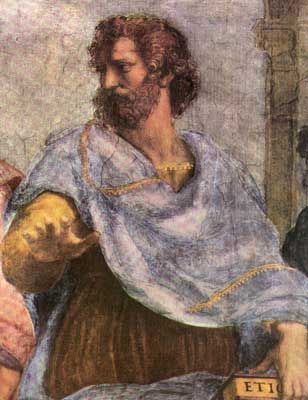
Aristotle didn’t believe in an anthropomorphic god as the Judeo-Christian/Abrahamic god but rather a deistic god. He thought of him as the unmoved mover by virtue of whom…
What is God? Everyone has their own definition of it. Some say he’s the first cause, while others precieve him to be someone who’s watching them all the…

If God already knows, with absolute certainty, what choices we will make in the future, then the future is already determined. No matter how much we feel that…
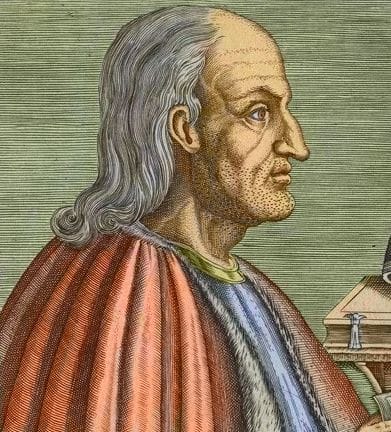
The ontological argument intends to prove the existence of god by the concept of god himself. What I mean by this Is that it intends to prove existence…
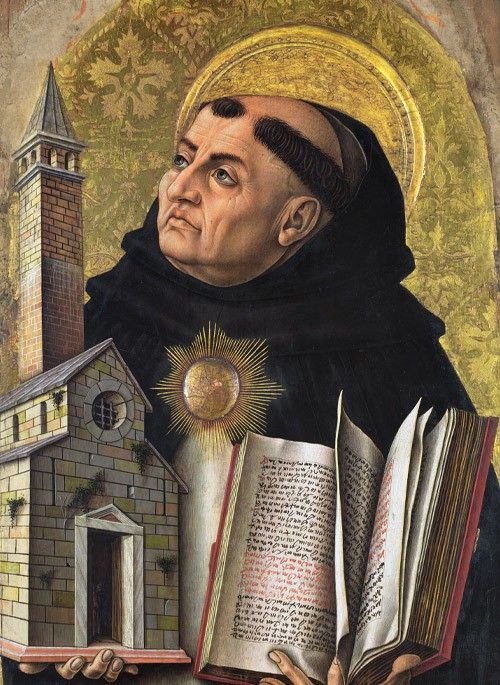
Saint Thomas Aquinas (1225-1274) presented five philosophical arguments to prove God’s existence in his work Summa Theologica. These arguments, known as the “Five Ways” (Quinque Viæ), rational proofs…
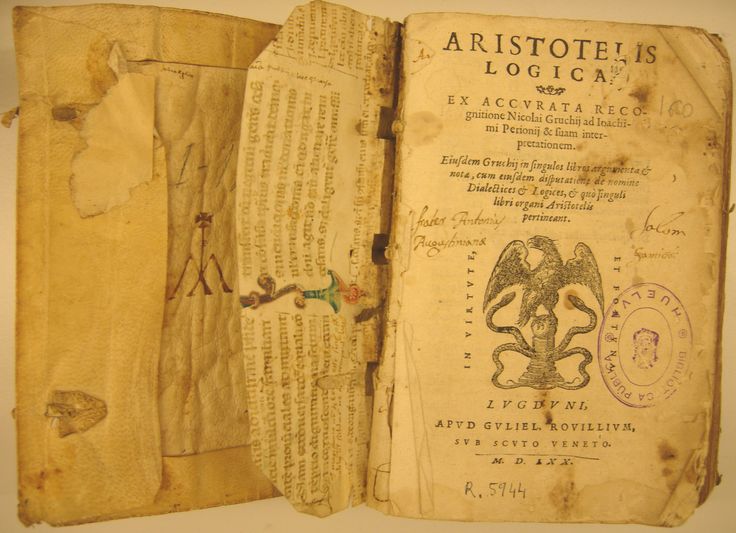
Syllogism In his book Prior Analytics, Aristotle introduced the concept of syllogism. Syllogism is a form of reasoning through which conclusions can be drawn based on specific assumptions…
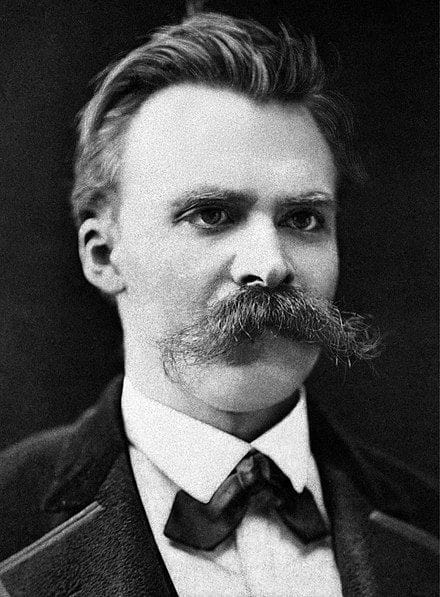
Friedrich Nietzsche’s famous phrase “God is dead” first appears in his book The Gay Science (Die fröhliche Wissenschaft) in the poem The Madman. In this poem, a madman…