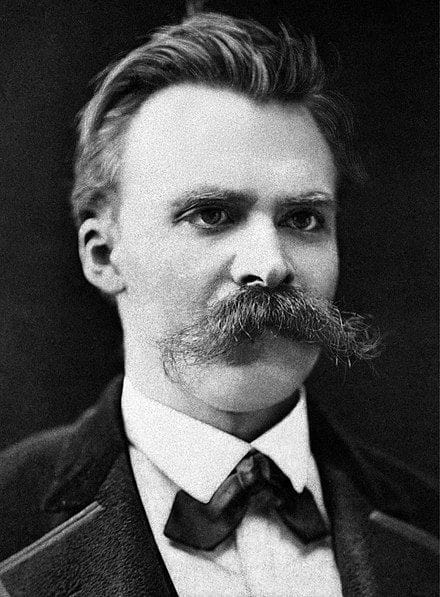
Friedrich Nietzsche’s famous phrase “God is dead” first appears in his book The Gay Science (Die fröhliche Wissenschaft) in the poem The Madman. In this poem, a madman carries a lantern in a marketplace, shouting: “God is dead!” “God is dead !” However, Nietzsche did not mean that God had “LITERALLY” died. But instead, he meant that in the modern world, traditional religious values and the concept of God had declined and lost their power and influence. Nietzsche elaborates on it deeply in his book Thus Spoke Zarathustra. Zarathustra meets a madman who has abandoned belief in God and retreats from reality, lamenting:
“God is dead. God remains dead. And we have killed him. How shall we, murderers of all murderers, console ourselves? That which was the holiest and mightiest of all that the world has yet possessed has bled to death under our knives.”
This powerful assertion shook the foundations of Western philosophy. But one thing needs to be cleared that Nietzsche’s purpose was not simple denial of religion or God’s existence. Instead, he was describing a social and intellectual revolution reflecting the Enlightenment Era: a time when people challenged religious dominance and recognized that religion had long caused wars and bloodshed. Religion and politics were intertwined to incite conflict among humans. For Nietzsche, the decline of religion was a natural outcome because people began deciding their destiny based on reason, leaving no role for religious authority. Nietzsche claimed that we have killed God ourselves. This was not only the end of religious systems but with this it also created an existential void where humans lose their sense of purpose , a key concern in Nietzsche’s thought. Religion had provided humans with ethics and meaning, and without it, a dangerous emptiness may arise, leading to despair, anger, and destruction. To fill this void, Nietzsche introduced the concept of the
Übermensch (Overman or Superman) : an extraordinary individual who creates their own purpose in life without depending on religious truths or miracles. Nietzsche regarded morality and life’s meaning as subjective, dependent on individual experiences, desires, and thoughts rather than fixed religious doctrines. He famously said:
“There are no facts, only interpretations.”
For Nietzsche, each person’s purpose is different and can be freely chosen.Nietzsche viewed humans as free creators, shaping their own future. This freedom carried great responsibility, as humans must now make their own decisions and find their own life’s meaning. It was a radical claim posing a new question to humanity:”If God is dead, upon what basis shall we live?”For Nietzsche, this moment marks humanity taking its fate into its own hands and this is the greatest freedom of all.