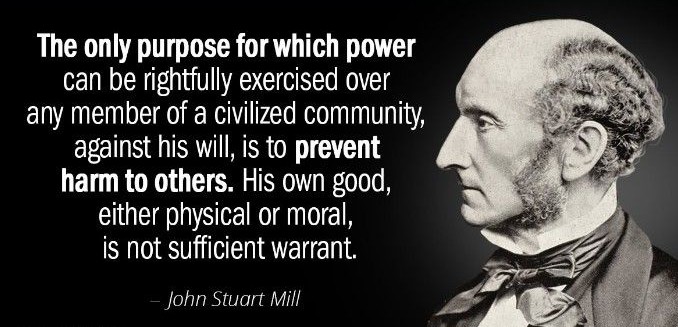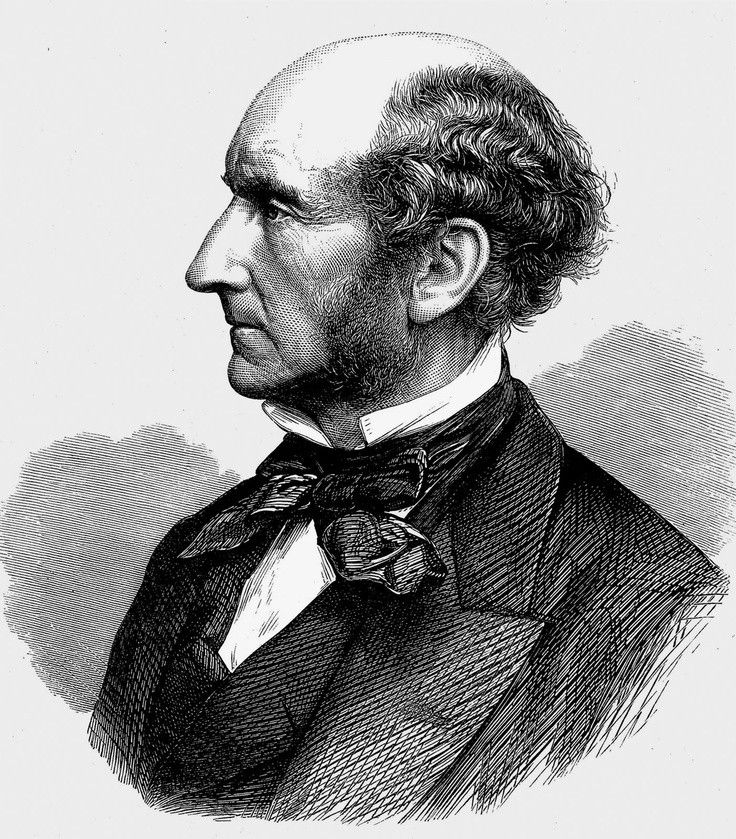
Mill believed that although we should restrict those actions that harm others as much as possible, we should never suppress freedom of expression. Mill says that when truth collides with falsehood, truth becomes clearer and more evident. Mill’s argument was that:
1: If an opinion is based on truth, then suppressing it deprives humanity of truth and thus eliminates the possibilities of progress.
2 : If that opinion is false, humanity still suffers harm, because the expression of such an opinion reveals its falsity. He writes:
“The peculiar evil of silencing the expression of an opinion is, that it is robbing the human race… If the opinion is right, they are deprived of the opportunity of exchanging error for truth: if wrong, they lose, what is almost as great a benefit, the clearer perception and livelier impression of truth, produced by its collision with error.”
This concept is called the “free market of ideas,” where truth emerges from the free collision of different opinions, and falsehood exposes itself.Writing further on freedom of expression:
“If all mankind minus one, were of one opinion, and only one person were of contrary opinion, mankind would be no more justified in silencing that one person”
This means that if all of humanity holds one position and only one person disagrees with them, all of humanity has no right to silence that one person. Now the question arises: if someone’s opinion causes distress to another, would this constitute “harm” under the harm principle and therefore should be stopped? Mill has distinguished between “harm” and “offense,” and he argues that restricting freedom of expression or action based solely on offense is not justified. Offense merely means someone being upset or hurt, such as when someone criticizes religion or questions social values—such ideas do not cause us any harm, therefore restrictions cannot be imposed on them. Mill writes:
“it does not harm us to hear our favourite ideas contradicted; it does not harm us to hear our religious beliefs denounced as nonsense; it does not harm us to know that other persons believe our allegiances are a tissue of superstitions.”
All of this does not harm us but merely makes us feel uncomfortable, which we should tolerate. Mill’s argument was that freedom of expression is essential for the search for truth and individual development, even if some expressions may be unpleasant or offensive to some people. Therefore, the state should not impose restrictions on any expression or action solely on the grounds that it is offensive to someone. However, Mill does say that speech that directly leads to acts of violence, or whose result reaches someone in the form of real harm (such as physical, economic, or interference with freedom), such speech should definitely be stopped. So, hate speech of any kind should be tolerated… This is the liberal position that criticism leads to the improvement of ideas. Since no individual or institution possesses all knowledge, freedom of expression promotes social progress and protects from ignorance