Historical Background of Liberalism
Liberalism began in 17th-century England. Though it was formally introduced as an ideology by the famous British philosopher and founder of modern empiricism, John Locke, traces of its incomplete and fragmented form can also be found in the works of ancient Greek philosophers.
Age of Enlightenment
The story begins from the Age of Enlightenment , when people began questioning the king’s right to rule. They asked Why should monarchy exist? Who gave the king the right to govern? In response to these questions, the Catholic Church claimed that a king’s authority was divinely granted and that challenging it was equivalent to challenging God. (They said this because they shared power with the monarchy as you know catholic church held most power in dark ages ) This belief was enough to instill fear in the uneducated masses of the Middle Ages and reinforce the idea that the king was God’s shadow on Earth.
Renaissance and Humanism:
But, things started to change during the Renaissance when the philosophy of Humanism emerged. Humanism argued that humans themselves were the measure of all things and that morality should be judged based on what is beneficial or harmful to “humans”. If this remained just a philosophical debate, monarchy might have survived unchallenged. But influenced by these ideas, Martin Luther, the founder of Protestantism, declared that all humans are equal in the eyes of God and that no intermediary was needed for worship or divine connection. And this idea impacted England, which officially embraced Protestantism…
The Glorious Revolution:
I suppose, One of the most important events in limiting monarchical power was the Glorious Revolution, which established Parliament as more powerful than the king. However, some still believed in the divine right of kings. One such thinker, Sir Robert Filmer, defended monarchy in his book Patriarcha, arguing that God had commanded humans to obey His chosen rulers. He further claimed that kings possessed an innate wisdom granted by God, which enables them to govern.
This idea of Robert Filmer was challenged by One of the contemporary philosopher of that period ; Thomas Hobbes… his book Leviathan, he asked, If kings rule by divine right, where does their authority go when they are overthrown? He argued that a ruler’s legitimacy comes from the people, not from God. A ruler’s role is to maintain order, by any means necessary.
State of Nature and John Locke’s Ideas:
Now was the beginning of the question:
“what is state?”
Thomas Hobbes introduced the concept of a State of Nature, a hypothetical time when no government existed. Which had proceeders like John lock, Jean Jacque Rousseau, Baruch Spinoza, David Hume ( though we’ll only be discussing lock, Rousseau) So,
Hobbes believed that, in such a state, humans would be in constant conflict, as there would be no one to govern, leading to chaos and stagnation. Therefore, people agreed to a social contract, forming governments to ensure peace and punish those who disrupted it. Whereas
John Locke agreed on these ideas but disagreed with Hobbes’ brutish view of human nature. He believed that even in a State of Nature, people would follow a “Natural Law” based on reason, preventing complete chaos (he was saying that people had innate concept of right and wrong). He argued that individuals are born free with certain inalienable rights, life, liberty, and property.. which no ruler can take away.
Locke further asserted that a government derives its power from the people, not from God. If a government fails to protect natural rights, people have the right to overthrow it. He also challenged the idea that kings possess inherent wisdom, argued further that knowledge comes from experience and observation, and we are born as a blank slate (tabula rasa) which was his philosophy of empiricism… John Locke is considered the father of both empiricism and librealism…
Liberalism’s Core Principles:
Locke was also an advocate of religious tolerance and he argued that government should stay out of religious affairs, making faith a personal matter. He opposed gender inequality, believing that men and women were inherently equal. Lockes ideas laid the foundation of liberalism.
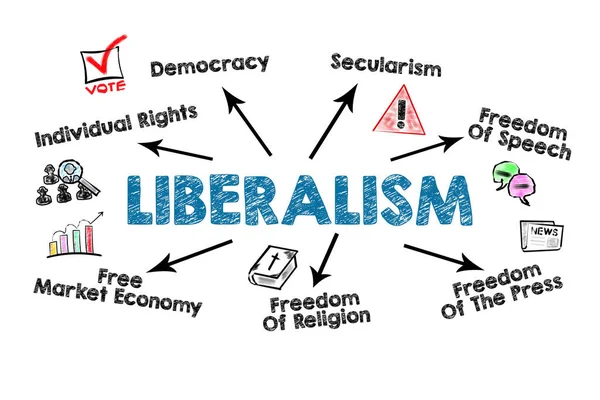
The core principles of liberalism are( we’ll look at each individually) :
- -Governments should be formed through public consent (democracy).
- -Every individual should have the right to vote without discrimination.
- -The government’s role is to protect life, property, and personal freedom. (Individualism)
- -Religion and the state should be separate. ( Secularism)
- -Power should not be concentrated in one person or institution. (Separation of powers)
-Montesquieu and Separation of Powers:
Building on liberal ideals, the philosopher Montesquieu proposed the separation of powers to prevent absolute power of sovereign which will prevent government from turning into authoritarian state…
So He divided government powers into three branches:
1. Independent Judiciary – Courts should be free from government influence and capable of ruling against the government when necessary.
2. Legislative Power – Lawmaking should be separate from law enforcement.
3. Executive Power – Those who enforce laws should not have the power to create them.
Liberalism promotes minimal government interference in individual’s life, emphasizing individual autonomy. People should be free to express themselves and form political groups. No one is above the law, and legal processes should be transparent. Minority rights should be protected, even if the majority disagrees. Laws should benefit all of humanity. Public trials, scientific progress, and freedom of speech should be upheld.
Freedom of Expression:
The liberal philosopher Voltaire famously stated:
“I disapprove of what you say, but I will defend to the death your right to say it.”
Liberals argue that criticism leads to improvement. Since no single person or institution possesses all knowledge, free expression fosters societal progress and prevents ignorance. These are fundamental liberal values.
Liberalism and Women’s Rights:
Though liberal philosophers were mostly men, women also played a crucial role. Mary Wollstonecraft was one of the most influential figures in early feminism. Yes you heard that right, she was libreal philosopher… She argued that women are not inherently inferior to men; rather, societal norms shape their perceived limitations. She believed that if men were subjected to the same restrictions, they would develop similar weaknesses( not talking about biological weakness).
Economic Theories of Liberalism:
Initially, liberalism supported complete economic freedom, opposing trade barriers, taxes, and government intervention—ideas known today as Classical Liberalism.
Classical Liberalism and Capitalism:
The economic system of Classical Liberalism was shaped by Adam Smith, the father of modern economics. He advocated for a free market where supply and demand dictated prices and competition, rather than government policies. He opposed labor unions and believed workers should be paid just enough to survive. Since Classical Liberalism primarily benefited the wealthy, the suffering of the poor was dismissed under the idea of Social Darwinism—”Survival of the fittest.”
Critique and Emergence of Social Liberalism:
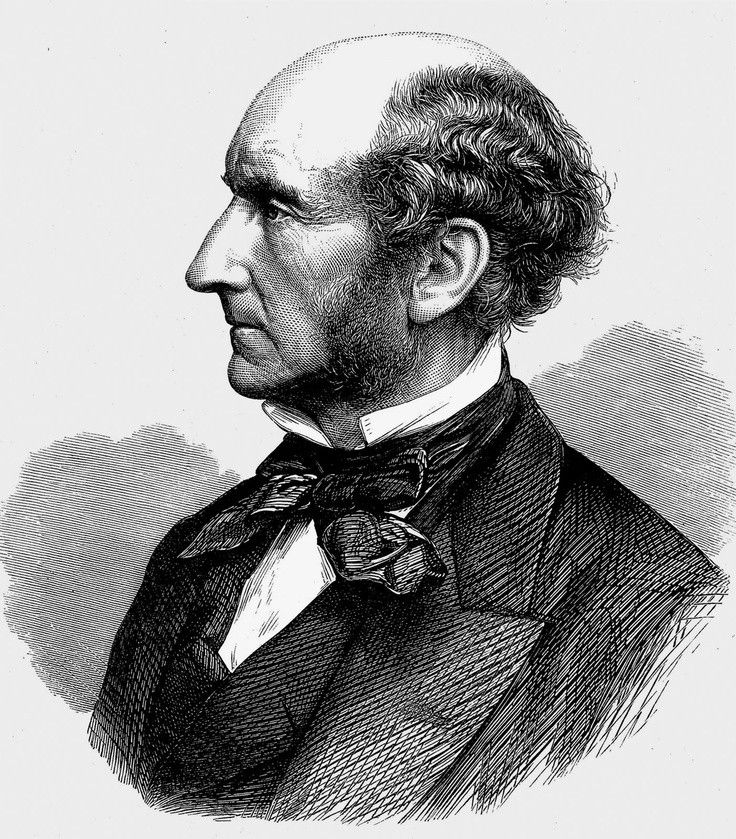
The economist Jean Charles de Sismondi criticized Classical Liberalism, calling it deceptive. Inspired by his critiques, John Stuart Mill and Thomas Hill Green introduced Social Liberalism.
Social Liberalism and Welfare State:
Green argued that wealth should be shared with society so that the government could support those in need. He introduced the concepts of negative and positive liberty:
Negative Liberty – Freedom from external interference.
Positive Liberty – The ability to make meaningful choices, requiring societal support.
He and Mill proposed a welfare state, advocating higher taxes on the rich and minimum wages. These ideas became the foundation of Modern Liberalism.