Rawls proposes a hypothetical situation what he calls ” The veil of ignorance” where you are the one who will determine social structure, but the catch is you do not get to know which position in society you will end up in, you have no information about your own talents, class-background, gender, race, You determine it with a veil of ignorance on you.
Only in that case, he says, can you determine it justly, as you are unaware of your own position, you will choose principles that maximize the prospects of the least-well-off position, since you might occupy that position.
Just like for instance when two people have to divide a cake and to divide it justly, you let one person cut it and the other person choose the slice.
Rawls Writes:
“No one knows his place in society, his class
position or social status, nor does anyone
know his fortune in the distribution of natural assets and abilities, his intelligence, strength, and the like. I shall even assume that the parties do not know their conceptions of the good or their special psychological propensities. The principles of justice are chosen behind a veil of ignorance. This ensures that no one is advantaged or disadvantaged in the choice of principles by the outcome of natural chance or the contingency of social circumstances. Since all are similarly situated and no one is able to design principles to favour his particular condition, the principles of justice are the result of a fair agreement or bargain.”
From: Theory of justice , chapter 1
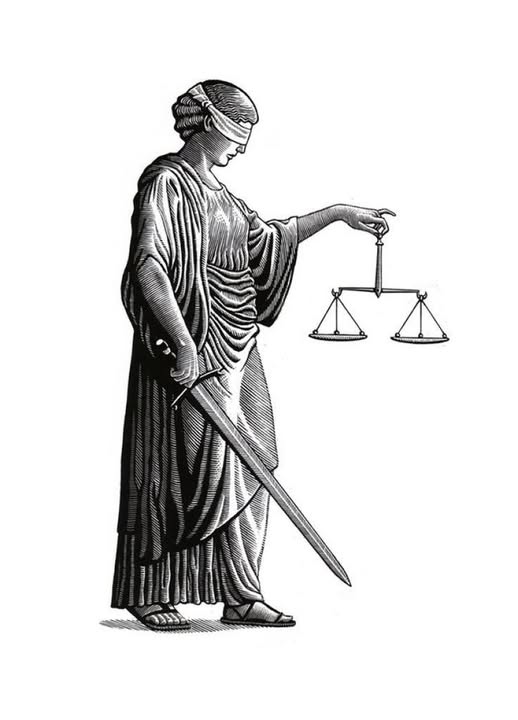
That is why it is often called that justice is blind…