Epicurean Epistemology:
Criteria for truth:
Epicurean epistemology has three criteria of truth:
- sensations (aisthēseis),
- preconceptions (prolēpseis),
- and feelings of pleasure and pain (pathē).
The first criterion, sensation, holds that all sense perceptions are inherently true and are unable to be changed or reformed. This give rise to general question that how do we experience optical illusions? Senses being inherently true here does not mean that our interpretations of senses are always correct, but rather that the sensory experiences themselves accurately report the atomic impacts they receive. Errors arise in judgment (hupolēpsis) rather than in perception itself. According to Epicureanism, we precieve a object
when films of atoms enter our eyes. So, a distant tower may appear round when it is actually square, but the visual sensation of roundness accurately reflects the atomic films reaching the observer from that distance. (accurate relative to the films reaching the eye , not accurate to the tower’s intrinsic shape) The problem is in judgement of it.
The second criterion of truth, preconceptions (prolēpseis) answers problem of universals. It refers to general concepts that are formed through repeated sensory encounters with particular objects. These preconceptions function as natural classifications of particulars that enable recognition of different kinds of things. For example, our preconception of “horse” develops through repeated sensory experiences with individual horses which creates a general concept of horsness.
The third and last criterion is pleasure and pain. They serve as criterion for value . It’s simply what counts as good is what promotes stable pleasure and absence of pain; they also give immediate practical knowledge about what benefits or harms us.
Politics:
Epicurean politics sums up in famous dictum to “live unnoticed”.. it does not advocate complete social withdrawal but rather recommends that we should avoid the anxieties and corruptions associated with political ambition and public competition.
Epicurean justice theory explains moral and legal institutions through social contract analysis. According to Epicureanism, Justice arises from mutual agreements to refrain from harming others in exchange for similar restraint, It focuses on self preservation.Creating conditions of security are necessary for individual flourishing. These agreements reflect rational self-interest rather than objective moral duties, as individuals benefit from systems that protect them from exploitation and violence.
This contractual theory became the influence of modern social contract theories like Hobbesian conventionalism.
The Epicurean Community::
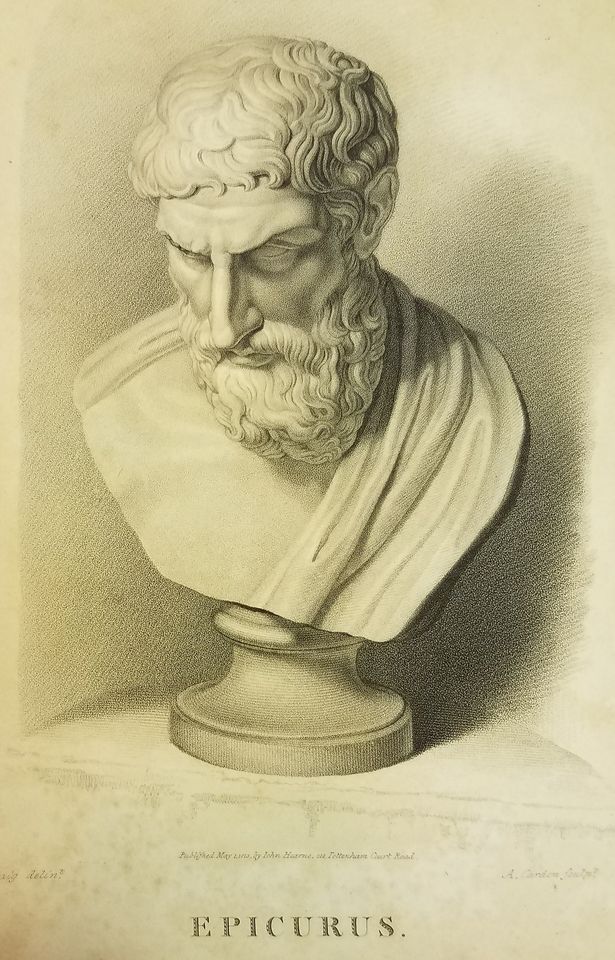
The practical implementation of Epicurean philosophy was in “the Garden”, the community established by Epicurus outside Athens around 307 BCE. this school operated as a genuine commune where members lived together according to philosophical principles.
The Garden’s organization embodied distinctly egalitarian principles which were unusual in ancient Greek society. Women participated fully in philosophical discussions and community life, including Epicurus’s companion Leontion and other female disciples who contributed to the intellectual life of the school. Slaves were also treated as philosophical equals, they engaged in theoretical discussions and participated in community decisions.
The economic structure of the Garden had a combined individual property ownership with communal resource sharing. Members retained personal possessions but contributed to common expenses and participated in mutual support during times of need. So there was balanced individual autonomy with collective security, creating conditions conducive to both philosophical reflection and practical cooperation.